Why Communities Are Corporate Accountability's Missing Link: The Little Voices of Busia

By Judith Nansubuga, 2026 Bertha Challenge Fellow
Who holds a corporation accountable? Most people would name Regulators, Courts and Civil Society Organisations. Very few would name the community living beside the projects.
That omission is not unique to Uganda. Across the world, the people closest to development projects such as the extraction projects carry the heaviest consequences and are the last to be consulted on how those projects are governed. Uganda's law gives government clear tools of oversight: environmental compliance reports go to the National Environment Management Authority (NEMA) and tax obligations are collected by the Uganda Revenue Authority. What the framework does not make clear is how affected communities can take part, continuously and meaningfully in checking whether companies keep their promises. Closing that gap would not weaken government oversight. It would rather strengthen it.
Experiences from Mawero
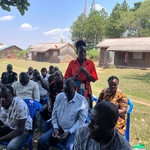
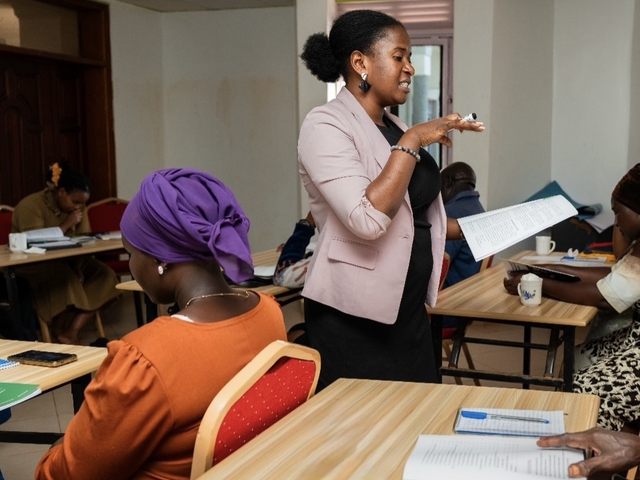
Over the past months, as a 2026 Bertha Challenge Fellow, I have closely worked with the Mawero Mining Host Community in Busia District, made up of Aguriat, Amagoro, Alupe and Akipenet villages to implement a legal empowerment project under the fellowship.. This work, has changed how I understand accountability in practice.
Residents live with water and air pollution, unresolved land compensation concerns and restricted access to places they have long enjoyed, all linked to the ongoing operations of Wagagai Gold Mining (U) Ltd. Some say the perimeter wall, erected by the mining company, has taken away views of landmarks such as the Tororo Hills. These are not abstract policy issues. They shape homes, health, livelihoods and people's relationship with the land they call home. Yet the people who live with these impacts are often the least represented in the processes meant to hold companies to account.
Not beneficiaries but accountability actors
Communities are too often treated as recipients of corporate social responsibility, people to be given something rather than people with something to say and with agency. Mawero shows why that view is too narrow. Community members and grassroots actors in Busia have taken concrete steps, including lodging complaints with the Ministry of Energy and Mineral Development over alleged human rights and environmental violations by Wagagai Gold Mining (U) Ltd. These actions have drawn greater attention to community concerns and built a stronger sense of accountability in the area. Not every challenge has been resolved. But the progress shows that when communities understand their rights and organise to claim them, even voices that seem small can shift the conversation.
Three reasons communities matter.
1. They make monitoring continuous. A government office in an urban centre can only inspect periodically. The community is there every day. Residents notice changes in their water, air and land and can report possible violations as they happen. Their proximity gives them both knowledge and a stake. Community participation does not replace formal monitoring but it turns occasional oversight into constant vigilance.
2. They change the narrative. The most important lesson for me has been watching communities move from being portrayed as passive recipients of development to shaping the conversation about it with real demands. The people of Mawero are not waiting for the government, lawyers or civil society to speak for them. They are asking questions, lodging complaints, demanding information and seeking solutions. In doing so, they challenge the old assumption about who gets to speak on natural resources.
3. They make commitments enforceable. A promise made to a community is only as strong as the community's ability to hold those who made the promise accountable and demand delivery. Communities that know what was agreed and are organised give regulators and civil society something they cannot generate alone: a local, persistent, informed demand that commitments be honoured.
The power of a small voice.
In September 2026, I saw all three reasons at work. Community members kept raising their concerns with the relevant authorities about the absence of a Community Development Agreement (CDA) between the Mawero Mining Host Community and Wagagai Gold Mining (U) Ltd. Despite real obstacles, the engagement produced results, a draft CDA has been issued, and the community has begun organising itself, with a Board of Trust and a Community Development Committee selected by community members to identify community priority needs and oversee their implementation through the CDA.
This persistence reminded me that accountability does not begin in a Courtroom, a government office or a large advocacy organisation. Sometimes it begins when ordinary people decide that something affecting their lives is not acceptable and choose to do the work and speak. A community's voice may look small beside the power and resources of a large corporation. But when it is organised and persistent, it creates pressure for change. The little voices of rural Busia are reshaping the accountability story in the extractives sector.
The real question.
Whether communities’ matter to corporate accountability is no longer in doubt. They are rights-holders, knowledge holders and accountability actors. The question that remains is whether our systems are designed to listen to them, respond to them and give them real space to shape decisions about the resources, environment and land they call home.
Conclusion.
The people of Mawero have shown what communities can do with very little: they have organised, raised their voices and moved a draft CDA from absence to the table. Government, Corporate Actors and Civil Society Organisations all have the power to make that space wider.
This blog has been produced as part of the 2026 Bertha Challenge Fellowship.

Judith Nansubuga
Staff Advocate & 2026 Bertha Challenge Fellow
Judith Nansubuga is a young Human rights and Environmental activist who is committed to build a just world where rights are protected and the eco-system thrive for the future generations.